34 projects compete at Green Startup Competition 2026 in HCM City
Your browser does not support the audio element.
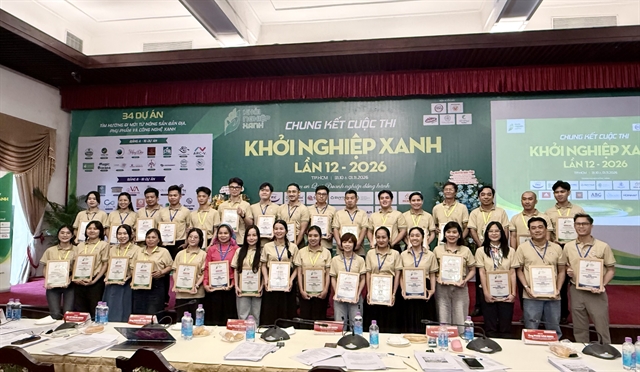 |
| Thirty-four projects from 18 provinces and cities compete at the 12th Green Startup Competition 2026 in HCM City. — VNS Photo Xuân Hương |
HCM CITY — Thirty-four projects from 18 provinces and cities are competing in the 12th Green Startup Competition 2026, showcasing innovations in agricultural processing, green materials, waste recycling and technology aimed at creating greater value from local resources.
The two-day final round, held on October 31 and November 1 at the Independence Palace in HCM City, is organised by the Business Studies and Assistance Centre (BSA) and the High-Quality Vietnamese Goods Business Association, in collaboration with Vinamit JSC, Trung Nguyên Legend Group, Cỏ May Sa Đéc Co., Ltd., the Green Startup Network and other supporting organisations.
Following semi-final rounds held in nine regions nationwide, HCM City has the largest number of finalists, with seven projects, followed by Hà Nội and Đà Nẵng with three each. Phú Thọ, Đắk Lắk, Khánh Hòa, An Giang, Cần Thơ and Vĩnh Long each have two projects, while Nghệ An, Lào Cai, Quảng Ninh, Thanh Hóa, Lâm Đồng, Gia Lai, Cà Mau, Đồng Nai and Đồng Tháp each have one.
The organisers said the geographical spread highlights the growing reach of green entrepreneurship across Việt Nam, with projects leveraging the distinctive resources and strengths of their respective localities. While those in major cities benefit from better access to innovative technologies, markets, business partners and support networks, many initiatives elsewhere draw on local agricultural produce, medicinal plants, traditional crafts and available by-products.
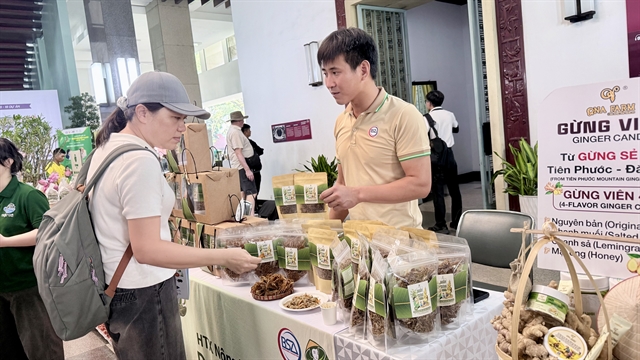 |
| A finalist showcases its products on the sidelines of the 12th Green Startup Competition 2026 in HCM City. — VNS Photo Xuân Hương |
A major group of finalists focuses on agricultural and food processing to develop higher-value products. Projects include canned fresh palmyra fruit, Thuận Thiên cashew butter, Magic Banana, Kim Anh tamarind jam, diversified products from Gay tea plants, dried passion fruit and passion fruit juice with wild honey, healthy food alternatives made from monk fruit and konjac by PQ Healthy Foods, brackish-water tilapia fish cakes, and Lâm Thượng bamboo shoots.
These initiatives seek to bring local ingredients closer to consumers through processing, product development and branding. Processing can extend the shelf life of fresh produce while creating more options for transportation and distribution. Commercialising less widely used local resources could also open up new markets, provided businesses identify the right customer groups and competitive advantages.
Another group of projects addresses environmental challenges through by-product utilisation, material recycling and waste reduction. Examples include Coffeenergy, which aims to develop batteries from coffee grounds; initiatives to turn durian husks into biochar, wood vinegar and organic fertiliser; Green Net, which reuses fishing nets; BioWraps Solutions; and DMCBiochar’s indirect circular pyrolysis technology for converting agricultural waste into biochar.
Economist Phạm Chi Lan, who has supported the participating startups, highlighted the potential to create economic value from materials traditionally regarded as waste.
“Many things once considered discarded waste can become commodities, creating jobs for different groups of people,” she said.
She also underscored the importance of assessing business ideas against market demand, economic viability and community benefits. Beyond developing innovative products, startups need to improve production processes, build distribution networks and establish sustainable markets to achieve long-term growth.
Vũ Kim Anh, deputy director of BSA and head of the Green Startup Competition, said the centre had supported participating projects through training programmes, seminars and specialised courses on product development, packaging design, digital communications and market expansion.
BSA had also organised trade promotion activities, giving startups opportunities to sell their products, reach consumers, consult experts and connect with businesses, she said.
These activities aim to strengthen startups’ product development and business capabilities, while helping them expand market access and identify opportunities to bring their solutions to a wider customer base. — VNS