Former Iraqi Prime Minister Mohammed Shia al-Sudani defended his government’s financial record on Saturday, rejecting claims that it had left state coffers empty and arguing that his administration spent 450 trillion dinars ($296.05 billion) of the 660 trillion dinars ($434.21 billion) approved under the three-year budget.
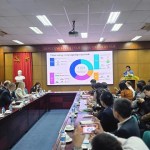
Speaking at a discussion forum in Baghdad, al-Sudani cited the growth in Iraq’s budget, which stood at $24 billion in 2004, under former Prime Minister Iyad Allawi, compared with an estimated $150 billion to $170 billion today. He questioned the reasons behind the increase and called for practical solutions and greater transparency with the public.
Al-Sudani also broke down the 2025 budget, which totaled 150 trillion dinars ($98.68 billion). Around 100 trillion dinars ($65.79 billion) went toward public-sector salaries, pensions, and social welfare, while 25 trillion dinars ($16.45 billion) covered sovereign obligations and government operating expenses. The remaining 25 trillion dinars ($16.45 billion) was allocated to investment, including 13 trillion dinars ($8.55 billion) for payments under oil licensing rounds and 12 trillion dinars ($7.89 billion) for services provided by ministries and provincial administrations.
Addressing claims that his administration had handed over an “empty treasury” to its successor, al-Sudani accused critics of spreading misinformation and urged academics, analysts, and media figures to present an accurate picture of the country’s financial situation rather than turn the debate into a personal dispute.
He also stressed that neither his government nor previous administrations could spend public money outside the budget approved by parliament. “Borrowing is subject to legal authorization,” he added, noting that the budget deficit stood at 70 trillion dinars ($46.05 billion), while the budget law authorized borrowing of 35 trillion dinars ($23.03 billion).
Read more: $45B deficit looms over Iraq’s draft 2027 budget
Regarding the oil sector, he said Iraq had been producing five million barrels per day while continuing to import petroleum products. During the final months of his government’s term, the country had achieved self-sufficiency in petroleum products, he added, before regional conflict disrupted that progress.
Al-Sudani rejected cuts to public-sector salaries as a way to ease the country’s financial pressures, pointing to the 21 trillion dinars ($13.82 billion) spent on the electricity sector alone. He also identified Iraq’s oil, industrial, and agricultural resources, alongside its workforce, as assets that could help the country achieve self-sufficiency.
The remarks come amid a political dispute over the financial obligations inherited by Prime Minister Ali al-Zaidi’s government, which succeeded al-Sudani’s administration. Last month, Iraqi lawmaker Youssef al-Kalabi challenged the former premier to appear before parliament and explain the country’s debt, which he claimed had reached 208 trillion dinars ($136.84 billion).