Anyone reading a Dogecoin forecast today is shown two numbers almost every time: the price and the inflows into the American DOGE ETFs. The third number is usually missing, and it is the most important one. The Dogecoin protocol issues new coins every day, and more value than the ETFs collected on their strongest day this month. On September 26, 2026 at 14:41 UTC the price stood at $0.097562, or 0.085648 euros (CoinGecko). Over the same period, chain data from Blockchair records 1,353 blocks found, which is 13.53 million new DOGE worth around $1.32 million. The strongest daily inflow into the American spot ETFs in September was $1.17 million on September 22 (SoSoValue, cited in market coverage). New supply was therefore larger than the demand being traded as a catalyst.
It does not follow that the price must fall. What follows is that a forecast looking only at ETF reports is considering the smaller half of the equation. This article works through the larger half and shows you what you can check in concrete terms over the coming days: which marks hold, what market capitalisation a price target presupposes, and which tax deadline is running out at a twelve-month loss of 57 percent.
Dogecoin Forecast: The Price on September 26, 2026 and the Marks Above and Below
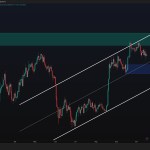
Three marks matter on the upside. The first is the daily high at $0.099703, the second the round mark of $0.10, which DOGE had reclaimed in the week to September 22 and which corresponds to the highest level since June. The third sits at $0.12 and marks the lower bound of the band several model forecasts name for the end of the year. On the downside there is first the daily low at $0.096449, then the mark of $0.09 that the price had fought over at the start of the month, and as a fallback point the level of $0.0931 to which DOGE had dropped on September 24 after a daily loss of 10.3 percent.
These marks are points of observation and no buy signals. The reasoning lies in the trading history of the past four weeks rather than in a pattern. Anyone using them sets them before the order and does not change them afterwards.
Why Every Dogecoin Forecast Has to Count the Issuance
That is no criticism of the protocol, because the fixed issuance was a deliberate decision by the developers to keep the coin usable as a means of payment over the long term. For a price forecast, though, it has a hard consequence. Every dollar entering the market is spread across a supply of coins that will be larger next year than it is today. The ratio of demand to price therefore does not stay constant, even if demand does.
13.53 Million New DOGE a Day: The Calculation in Detail
The figure can be recalculated from the chain data instead of being derived from the protocol text. In the 24 hours before the pull on September 26, miners found 1,353 blocks. At 10,000 DOGE per block that gives 13.53 million new DOGE. At a price of $0.097562 that is $1.32 million of fresh supply in a single day.
Extrapolated to a year at the same block rate, it comes to around 4.94 billion DOGE, or about $482 million at today’s price. Measured against the circulating supply of 156.08 billion DOGE that amounts to an expansion of 3.16 percent a year. Two independent sources confirm the circulating supply itself: CoinGecko gives 156.076 billion, the chain analysis by Blockchair 156.077 billion.
Set that $1.32 million beside the daily volume of $888.25 million and it comes to 0.15 percent. That sounds small, and on a single trading day it is. The point is the sum: this amount accrues every day, whereas an ETF inflow is an event that can fail to arrive and that will disappear entirely at one provider in October.

ETF Inflows Against New Issuance: The Comparison the Headlines Do Not Draw
Inflows into the American spot ETFs on Dogecoin did indeed pick up in September. On September 21 net inflows of $909,650 were reported, three times the previous week. On September 22 came $1.17 million, according to SoSoValue’s data the strongest daily figure since the monthly total of $2.15 million in May 2026. The Grayscale trust GDOG recorded $248,510 on September 16.
Hold these figures against the $1.32 million of daily new issuance. The strongest ETF day of the month was around 13 percent below it. On all other days the gap was considerably larger. Added to this is a countervailing finding that rarely appears in the bullish reports: Bitwise has announced the closure of its Dogecoin ETF for October. A product that closes does not buy more, and it can release holdings.
What a Price Target of $0.20 or $0.40 Demands in Market Capitalisation
Price targets can be checked by converting them into market capitalisation. That is the only measure in which a target becomes comparable with the rest of the market. By the end of the year, at the current block rate, around another 1.23 billion DOGE will be added, putting the circulating supply at roughly 157.3 billion.
At $0.20, the lower bound of the band of $0.12 to $0.25 named by several models, that gives a market capitalisation of $31.5 billion. That is more than a doubling against today’s $15.23 billion. At $0.40 it would be $62.9 billion, about four times today’s value. Neither is impossible, and both demand capital that has to come out of other investments.
The price targets themselves come from model providers and analysis houses and are their assessment, not that of this editorial team. The targets diverge widely: some models name $0.12 to $0.25 for the end of the year, an evaluation by DigitalCoinPrice arrives at an average of $0.1151 for December 2026, and individual forecasts sit below today’s price with a monthly maximum of $0.0758. A range of $0.0758 to $0.25 is no forecast; it is an indication of how little robustness point targets have at this coin.
The All-Time High of $0.73 Is No Longer the Same Target Arithmetically
The all-time high stands at $0.731578, reached on May 7, 2021. The price today is 86.66 percent below it. Many forecasts name this high as a reference without counting the supply, and that is where the most interesting part gets lost.
Around 1,968 days have passed since May 7, 2021. At 13.53 million new DOGE a day that amounts to about 26.6 billion additional coins. The circulating supply back then was therefore roughly 129.5 billion against 156.08 billion today, an increase of 20.6 percent.
The consequence is concrete. If exactly the same sum of money returned that carried DOGE to $0.731578 in May 2021, it would today be spread across 20.6 percent more coins. The price would then be about $0.607 and not $0.73. To reach the nominal all-time high again, a market capitalisation of around $115 billion would be needed at the year-end circulating supply, more than seven times today’s value. Every year that passes without a new high pushes that threshold further up.
Dogecoin Against Bitcoin: Dilution Compared
The comparison with Bitcoin makes the order of magnitude tangible, and it can be drawn from the same chain data on the same day. On the Bitcoin network miners found 141 blocks in those same 24 hours. At a block reward of 3.125 BTC that is 440.6 new bitcoin, or around $37.0 million at a price of $83,998.
In absolute terms Bitcoin’s issuance is therefore almost 28 times as large. In relative terms the picture reverses: measured against a circulating supply of 20.09 million BTC, annual issuance amounts to about 0.80 percent. At Dogecoin it is 3.16 percent, so close to four times as much. And that share keeps falling at Bitcoin with every halving, while at Dogecoin it declines only slowly, because the absolute quantity stays fixed and the base grows.

Holding Period and Loss Offsetting: The Deadline That Counts at Minus 57 Percent
At a twelve-month loss of 57.0 percent, the relevant question for many holdings is not tax exemption but the opposite direction. A loss from a sale within the one-year period can be offset against gains from other private disposals. If the period expires before you sell, the loss is disregarded for tax purposes. Anyone who bought in the autumn of 2025 is therefore facing a deadline that does not come round again.
Buying Under MiCA: How to Recognise a Licensed Provider
In practice that means three things for your next order. Look up the legal name under which the provider is registered, because the brand name often differs from it. Check whether the authorisation covers the service you want to use, that is trading, custody or both. And look up which EU country granted the authorisation, because that determines which supervisor is responsible in a dispute. Anyone doing this check once for their main provider only has to repeat it when switching.
DOGE Custody: Your Own Address or an Exchange Account
Dogecoin runs on its own chain using the Scrypt method and not as a token on Ethereum. That has a practical consequence which counts before you buy: not every hardware wallet supports the Dogecoin chain, and support in the device firmware is not the same as support in the companion software on your computer. Check both on the model you own or intend to buy before you initiate a withdrawal.
Checking Spread and Fees on Memecoins
Before placing an order, therefore, do not compare only the disclosed trading fee, but work out once for your amount what a purchase with an immediate sale would cost. At a daily volume of $888 million, DOGE is liquid enough for this figure to stay small at the large trading venues. At smaller venues, and on payment routes involving an instant purchase by card, it is regularly several times higher. The second cost item is the withdrawal fee in DOGE, which accrues per transaction and bites hardest in percentage terms on small amounts. Two withdrawals a month cost double; one collected withdrawal costs once.
Checking a Dogecoin Forecast: What to Take Away
- Convert every price target into market capitalisation before you adopt it. Multiply the target by a circulating supply of around 157.3 billion DOGE at year end and hold the result against today’s $15.23 billion. Only this comparison shows how much new capital a target presupposes. Where you buy and at what fees is decided by our comparison of trading venues.
- Look up the purchase date of every position while the one-year period is still running. At a twelve-month loss of 57.0 percent, the deadline under section 23 of the Income Tax Act decides whether a loss can still be offset. Note the date, quantity and price for each addition in a record of your own, kept for instance with a tax tool or portfolio tracker.
- Check licensing and custody before you buy more. Search for the provider in the BaFin database under its legal name, and for a holding meant to sit, look up support for the Dogecoin chain on your own device, as described in our hardware wallet comparison.
(As of September 26, 2026. This article is not investment advice. Prices and fee structures change; check the terms with the provider before you buy.)