 |
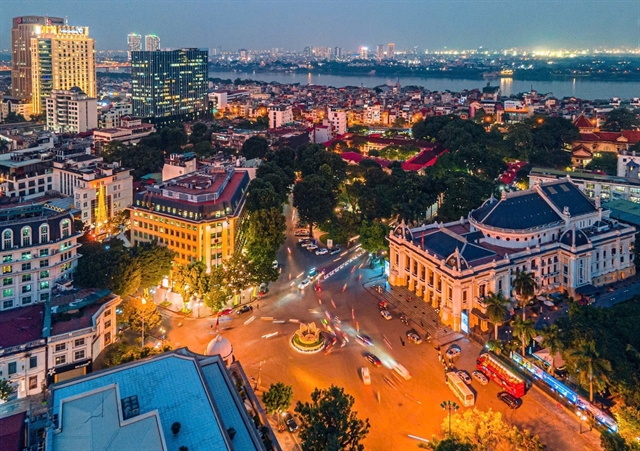
| Hà Nội at night. The capital city has record the first double-digit expansion in the third quarter this year. — VNA/VNS Photo Phạm Tuấn Anh |
HÀ NỘI — Hà Nội’s gross regional domestic product (GRDP) is estimated to have grown 10.02 per cent in the third quarter of 2026, its first quarterly double-digit expansion this year, as stronger services as well as industrial and construction activities put the capital on track in its push for double-digit growth.
Nine-month growth reached 8.85 per cent, higher than the 7.92 per cent recorded in the same period last year, but remained below the 9.73 per cent target set under its growth scenario, the municipal government said at a meeting chaired by Chairman of the municipal People’s Committee Vũ Đại Thắng on October 2.
The third-quarter expansion was significantly higher than the 8.2 per cent recorded in the same period last year and was the strongest quarterly growth rate so far in 2026, Nguyễn Ngọc Tú, director of Hà Nội Department of Finance, said.
For the first nine months, the services sector grew 9.14 per cent, while industry and construction expanded 8.8 per cent. Construction alone rose 10.89 per cent, making it one of the city’s fastest-growing sectors.
The city’s nine-month GRDP was estimated at nearly VNĐ1.3 quadrillion (US$49.2 billion) with services accounting for 67.64 per cent of the economy, followed by industry and construction at 20.60 per cent.
Services remained the largest contributor to growth, adding more than six percentage points to the nine-month expansion. Retail sales and consumer services revenue rose 15.6 per cent to VNĐ810.9 trillion.
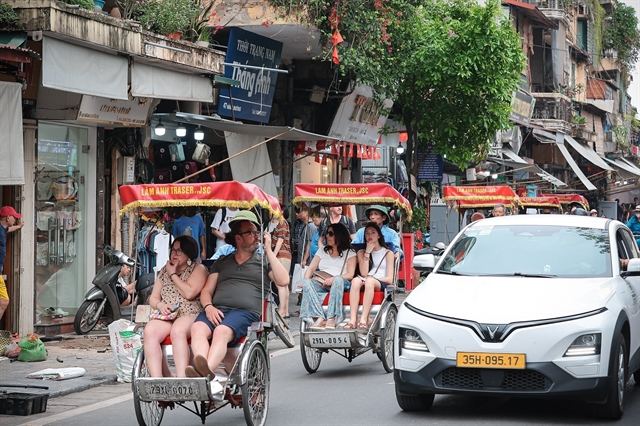 |
| Tourists explore Hà Nội’s Old Quarter by cyclo. — VNA/VNS Photo Phạm Tuấn Anh |
The capital city received about 27.5 million visitors during the first nine months, up 6.2 per cent year on year, including 6.67 million international visitors, up 22 per cent. Tourism revenue rose 13.3 per cent to VNĐ113.2 trillion.
The expansion is also driven by accelerated investment which is estimated to reach VNĐ451.4 trillion in the nine-month period, up 19 per cent.
Public investment disbursement stood at VNĐ115.6 trillion as of September 30, equivalent to 96.32 per cent of the target assigned by the Government and 69.91 per cent of the city’s plan.
State budget revenue reached VNĐ568.6 trillion, or 87.5 per cent of the annual estimate, up 6.1 per cent from a year earlier.
The capital city attracted foreign direct investment worth totally $4.07 billion in the period, an increase of 5.9 per cent, with science and technology projects accounting for more than 55 per cent.
Industrial production rose 9 per cent, while exports increased 9.3 per cent to $16.86 billion.
Hà Nội also is accelerating major infrastructure projects, with 84 projects worth a combined VNĐ330.5 trillion under way. Disbursement for the Ring Road 4 project had reached 88.3 per cent, while tunnelling work on the Nhổn-Hà Nội Station urban railway had been completed.
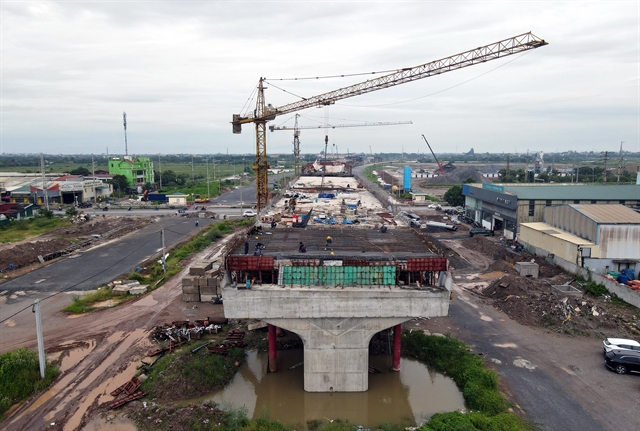 |
| Construction of a section of the Belt Road No 4 which runs through Thường Tín Commune. — VNA/VNS Photo Vũ Quang |
Fourth-quarter push
Despite the stronger third-quarter performance, the city faces a sizeable gap to its full-year growth target under Directive 17/CT-UBND.
Nine-month GRDP growth was 0.88 percentage point below the 9.73 per cent scenario, while third-quarter growth was 2.52 percentage points below the 12.54 per cent scenario.
Of 20 major economic sectors, five met or exceeded their projected growth rates, while 15 fell short.
Business conditions also remained challenging. About 26,100 businesses had temporarily suspended operations and around 10,600 had been dissolved, while inventories in the manufacturing and processing sector rose 26.5 per cent at the end of September.
Average consumer prices increased 4.91 per cent in the first nine months, adding pressure on production costs and purchasing power.
Deputy Chairman of the municipal People’s Committee Nguyễn Xuân Lưu called for detailed monthly work plans for the remainder of the year, with growth targets translated into measurable tasks and outputs.
Deputy Chairman Trương Việt Dũng proposed that Hà Nội Department of Finance develop a growth management dashboard covering about 20 to 30 key indicators to support policy making.
“Economic growth is improving, but the current results do not yet guarantee the target of double-digit growth for the full year,” Chairman Thắng said, calling for stronger efforts in the fourth quarter.
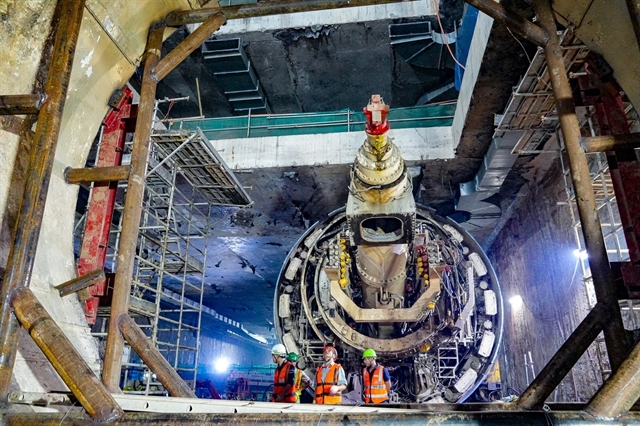 |
| The tunnelling work on the Nhổn-Hà Nội Station urban railway had been completed. — VNA/VNS Photo |
The city will focus on investment and construction as major sources of growth in the final quarter, Thắng said.
He called for faster land clearance and project implementation, while stressing that public investment disbursement must translate into actual construction output and economic value.
Hà Nội has reviewed 341 projects funded outside the state budget, with nearly 50 having had major obstacles resolved and basic procedures completed, while about 150 remain under review.
Projects that fail to complete required procedures by the end of October could face withdrawal, he said.
Hà Nội will also seek to accelerate private and foreign investment and attract high-quality FDI in high technology, semiconductors, artificial intelligence, research and development, and manufacturing.
The municipal authorities will work directly with major companies to address constraints related to credit, land, raw materials, energy, labour, logistics and investment procedures, Thắng said.
Hà Nội also plans to explore new sources of growth in the digital economy and cultural industries and study areas such as gaming and the night-time economy, while developing cultural products capable of generating long-term revenue.
The city plans to accelerate the development of five urban railway lines, with route planning largely completed and work now focused on financing mechanisms, contracts, advance funding and land clearance.
The city will also seek solutions to improve access to bank financing for social housing projects.
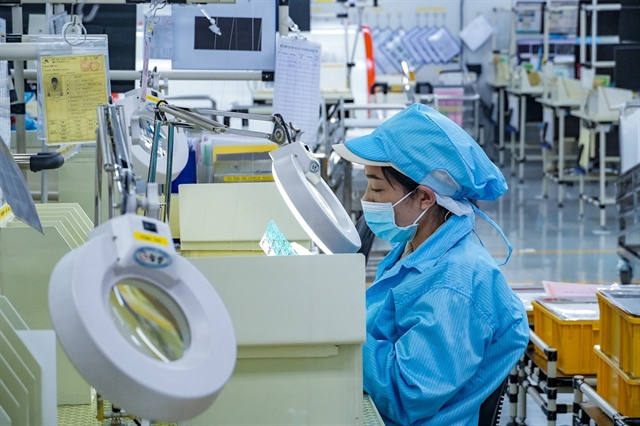 |
| Production at Meiko Electronics Vietnam in Thạch Thất Industrial Park, Hà Nội. — VNA/VNS Photo Trung Nguyên |
Chairman Thắng said the city would continue to review the effectiveness of special mechanisms under the 2026 Capital Law and related resolutions, with the aim of ensuring they help facility project implementation, mobilise resources and reduce administrative procedures for businesses and residents.
Expert Đinh Trọng Thịnh said achieving the target in the final months of the year would be a major challenge, with public investment playing an important role in building the foundations for future growth. Faster and more effective disbursement could also encourage private-sector investment and support production and business activity, he said.
Thịnh urged the city to identify remaining tasks, deadlines and responsibilities clearly, prioritising projects that have completed procedures, secured land and are ready for construction.
Economist Nguyễn Trí Hiếu said Hà Nội’s large public investment resources could provide additional growth momentum if capital is absorbed efficiently. He called for priority to be given to projects with strong spillover effects and those that can be completed and put into operation quickly, while removing obstacles related to land clearance, investment procedures and inter-agency coordination.
Hà Nội has set a target of GRDP at least 11 per cent this year. — VNS