
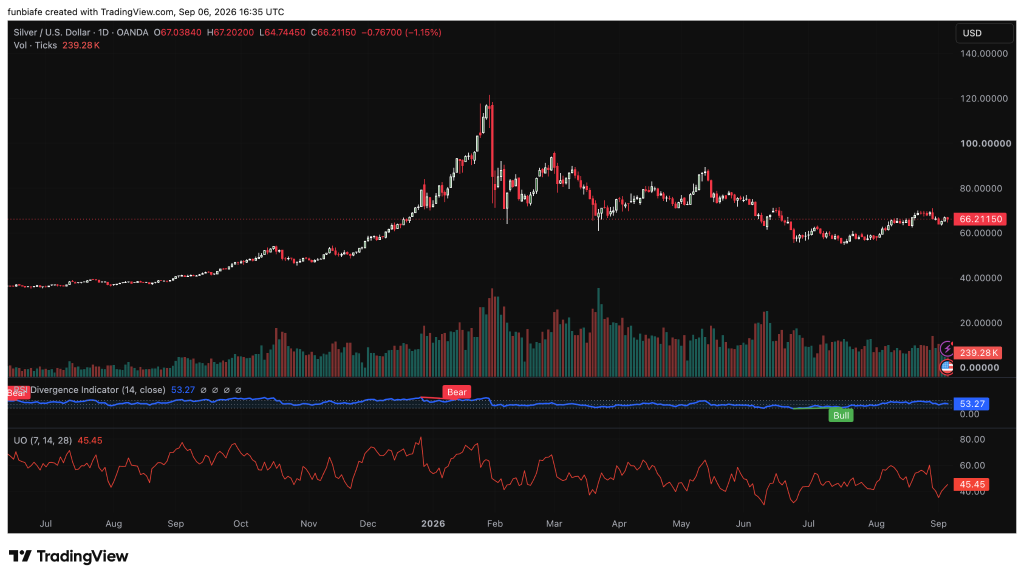
The high of the day hit $67.20, so there was a wide swing. Volume was solid too, 239,280 ticks backing that action. So it wasn’t a simple down day. There’s more going on underneath.
We had a look at the Silver chart, and one thing stands out: the market is still trapped inside a broad consolidation zone. Sellers have not been able to force a break below $60, and buyers have not been able to push the Silver price above $80.
Catalysts That Could Affect the Silver Price
A big catalyst came from Fed Chair Kevin Warsh, who struck a hawkish tone at the Jackson Hole symposium. He made it clear that policymakers still need more proof that inflation is actually heading back to target.
That shifted expectations for the Fed’s next meeting on September 15-16. The CME FedWatch Tool showed the odds of at least a 25-basis-point rate move jumping to 57.5%, up from 35% before Warsh spoke. So the market started pricing in tighter policy pretty quickly.
The Technical Picture Remains Mixed
The indicators aren’t giving a clear signal yet. RSI is at 53.27, leaning just slightly bullish but basically neutral. And there are both bullish and bearish divergences on the chart, so momentum is still split.
The Ultimate Oscillator is at 45.45, below the 50 level, so that’s a mild bearish tilt. But it’s also starting to turn higher, which shows buyers haven’t completely stepped away. So it’s a mixed read.
Taken together, the indicators point to one conclusion: Silver is at a decision point, and the next major move will likely come after a breakout from the current range.
How High Can the Silver Price Go This Week?
Above $80, the next major resistance levels are $100, $120, and eventually $140, which lines up with the previous peak on the chart. So the path is there for the bulls if they can build some momentum.
Analysts at TD Securities noted that investors continue to show interest in precious metals as concerns about currency debasement remain part of the macro discussion. The firm also pointed to growing investor interest in the sector despite the recent pressure from higher rate expectations.