Baghdad (IraqiNews.com) – Iraq on Thursday signed a set of landmark energy agreements with France’s TotalEnergies, QatarEnergy, and a group of international partners in a ceremony overseen by Prime Minister Mohammed Shia’ Al-Sudani in Baghdad.
The contracts, which also involve Turkey’s ENKA, China’s CPECC, and South Korea’s Hyundai Engineering & Construction, form the backbone of the Gas Growth Integrated Project (GGIP), one of Iraq’s most ambitious energy ventures in decades.
Al-Sudani welcomed Qatari Energy Minister Saad Sherida Al-Kaabi and TotalEnergies CEO Patrick Pouyanné to Baghdad, praising the deals as evidence of growing investor confidence in Iraq. He said the government is determined to keep Iraq’s doors open to serious international companies and to accelerate projects that strengthen energy security and economic growth.
Under the GGIP, TotalEnergies is expanding its footprint in Iraq by leading efforts to curb gas flaring, develop new processing facilities, and revive production at the Ratawi (Artawi) field. QatarEnergy has emerged as a critical partner, securing a 25 percent stake in the project alongside Basra Oil Company and TotalEnergies, while also taking a 50 percent share in a 1.25-gigawatt solar plant in Basra. That project, scheduled to come online between 2025 and 2027, is expected to power more than 350,000 Iraqi homes.
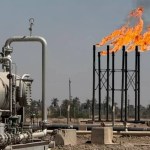
The signed contracts cover several large-scale projects. A $1.6–1.7 billion agreement with China Petroleum Engineering & Construction Corporation (CPECC) will see the construction of a gas processing plant capable of handling 600 million standard cubic feet per day in two phases, capturing gas that would otherwise be flared.
In parallel, ENKA of Turkey will build a central oil and gas complex with capacity to process 210,000 barrels of oil and 163 million cubic feet of gas daily, while deploying zero-flaring technology to reduce emissions.
Hyundai Engineering & Construction will lead a seawater treatment facility designed to process 7.5 million barrels per day, providing treated water for injection into southern oil reservoirs to maintain pressure and boost output.
Al-Kaabi stressed Qatar’s long-term commitment to Iraq’s energy sector while Pouyanné of TotalEnergies also reaffirmed the company’s strategy of embedding itself in Iraq’s energy future, highlighting the country’s economic progress and improving security climate as key drivers of investment.
Concluding the ceremony, Al-Sudani urged rapid implementation, particularly in gas recovery and renewable energy. He said new projects would deliver an additional 1,000 megawatts to the national grid beginning early next year, marking a significant step toward reducing Iraq’s reliance on imports and strengthening its energy independence.