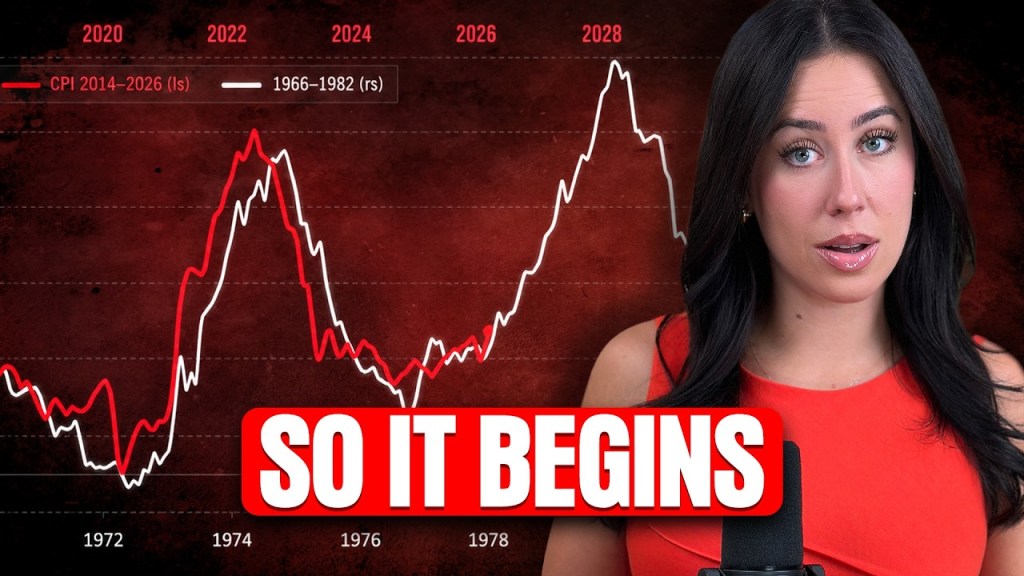
Economic systems undergo natural cycles, but historical patterns reveal a consistent trajectory regarding unbacked paper money. In recent years, growing national debts, persistent inflation, and shifts in international trade have raised important questions about the long-term stability of the global financial architecture. A comprehensive video analysis by ITM Trading explores these exact dynamics, detailing how monetary history repeats itself and why tangible assets are becoming the cornerstone of modern risk management strategies.
Throughout modern history, unbacked national currencies, commonly known as fiat currencies, have followed a remarkably predictable path. When governments experience prolonged financial obligations, the expansion of the money supply often becomes the default administrative response. This continuous influx of new currency units directly dilutes existing capital, leading to systemic inflation that steadily erodes consumer purchasing power. Over time, as national spending remains unchecked, the devaluation process accelerates, creating a compounding cycle that historically leads to monetary resets and severe economic readjustments.
A critical aspect of today’s changing monetary environment is the ongoing trend toward de-dollarization. For decades, the United States dollar has maintained an unprecedented position as the primary reserve currency for international trade and institutional settlement. However, global central banks are increasingly seeking to reduce their exposure to single-currency reliance. To mitigate potential risks associated with foreign debt obligations and currency devaluation, central banking institutions worldwide are aggressively accumulating physical gold at historic levels, choosing to anchor their reserves in an asset free of counterparty risk.
Historical precedent provides clear examples of how rapidly paper currency can deteriorate once public confidence wanes. Economic crises in countries like Venezuela and Mexico highlight how quickly domestic currencies can lose their functional value under hyperinflationary pressure. During these periods of severe financial distress, paper notes lose their ability to act as a reliable store of value. Conversely, physical gold has consistently retained its purchasing power across centuries of economic volatility, primarily because its finite supply and physical scarcity give it enduring intrinsic worth that cannot be created through policy decisions.
For everyday individuals and institutional investors alike, attempting to time economic shifts or predict exact future asset prices is often a futile exercise. The insights shared by ITM Trading emphasize that recognizing broader structural patterns is far more beneficial than forecasting short-term market movements. The process of currency devaluation builds momentum gradually over time—much like a growing snowball—before reaching a critical tipping point. Understanding these underlying macro trends allows individuals to position their assets thoughtfully well before systemic shifts force broader market realignments.
Ultimately, physical gold continues to serve as a foundational safeguard against monetary instability. As central banks continue their strategic pivot toward real assets, the case for holding tangible wealth alongside traditional paper assets grows stronger. To explore this detailed breakdown of global economic patterns and gain deeper insights into protecting your financial future, watch the full video from ITM Trading on YouTube.