Oil prices extended gains on Tuesday as risks of a prolonged conflict in the Middle East grew after Iran threatened to retaliate against any new U.S. attacks on its assets, heightening worries over supply disruption.
Brent crude futures climbed 49 cents, or 0.5%, to $97.49 a barrel by 0400 GMT. U.S. West Texas Intermediate crude was at $92.92 a barrel, up $1.44, or 1.6%.
Following Monday’s Labor Day holiday in the U.S., WTI was playing catch-up to Brent, which absorbed the weekend’s escalation a day earlier, said Suvro Sarkar, head of energy research at DBS Bank.
“Overall, we believe the recent uptick in hostilities between the U.S. and Iran has the potential to materially change markets’ reading of oil price related risks not only for the rest of 2026, but well into 2027 now,” he said.
Iran threatened the U.S. with “economic warfare” and said it had fired an advanced missile at U.S. warships, highlighting the risk of a wider escalation days after the two sides exchanged fresh strikes.
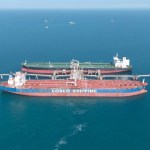
On Saturday, U.S. forces had struck three Iranian oil tankers, including one near Kharg Island, Iran’s main oil export hub, according to U.S. Central Command. The attacks followed strikes by Iran’s Revolutionary Guards on U.S. warships operating in the region.
“The recent escalation of the Middle East conflict has increased the likelihood of a prolonged standoff, punctuated by calibrated military action by the U.S. and Iran. This could see Persian Gulf supply remain constrained through the rest of 2026,” Daniel Hynes, an analyst at ANZ, said in a note.
“We don’t expect a full return to pre-war throughput until late Q1 or early Q2 2027.”
Shipping traffic through the Strait of Hormuz also slowed at the start of this week, after Iran threatened on Monday to retaliate for any new U.S. attacks.
Meanwhile, Goldman Sachs raised its Brent and WTI price forecasts by $5 to $85 and $80, respectively, for December 2026 and to $80 and $75, respectively, for 2027, reflecting its new assumption that Middle East shipping disruptions continue into 2027.
In financial services platform Marex’s September commodity outlook, analyst Ed Meir said that as long as the war continues, which it thinks it will given “the multitude of issues that have yet to be addressed”, crude oil prices will likely remain elevated through year-end.