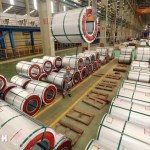
At a trade promotion conference organised by the Ministry of Industry and Trade on November 18, Lê Hoàng Tài, deputy director of the Vietnam Trade Promotion Agency, said packaging is an important supporting industry for manufacturing, processing and exports across sectors ranging from food and beverages to agriculture, textiles, electronics and consumer goods.
Beyond protecting products, the industry is increasingly expected to meet demands for design, brand recognition, convenience and sustainability, he said.
Vietnamese packaging firms have significant opportunities to expand exports, thanks to improved production capacity, while e-commerce, logistics and rising demand for environmentally friendly packaging are opening up new market segments.
However, exporters face increasingly stringent requirements concerning technical standards, product safety, traceability, recyclability and environmental responsibility.
According to Lê Thị Như Hạnh, standing vice chairwoman of the Vietnam Packaging Association (VINPAS), exports of four packaging categories tracked by the association, namely flexible plastic packaging, labels, paper boxes and corrugated cartons, reached approximately US$1.47 billion in the first nine months of 2026, up nearly 11 per cent year-on-year.
The four product groups were exported to 172 countries and territories, but export values varied considerably from one market to another, Hạnh said.
For example, Singapore imported about $56.8 million worth of corrugated cartons in 2025, while Việt Nam exported just $259,000 worth to Singapore.
Significant potential in major markets
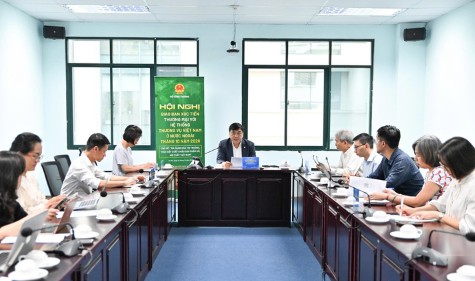 |
| At the trade promotion conference for the packaging industry organised by the Ministry of Industry and Trade on November 18. — Photo baocongthuong.vn |
Tạ Đức Minh, Vietnamese trade counsellor in Japan, said Vietnamese companies had established a strong position in several packaging product categories.
He cited WITS/UN Comtrade data showing that Japan imported more than $1.98 billion worth of plastic articles used for the conveyance or packing of goods, including closures and lids, in 2024. Imports from Việt Nam reached $302.5 million, accounting for 15.3 per cent of the total and making Việt Nam Japan’s second-largest supplier after China.
Potential growth areas include paper and carton packaging for logistics and e-commerce, high-barrier food packaging, and industrial packaging for electronics, automotive and mechanical engineering manufacturers.
He pointed out that one opportunity was to join the supply chains of Japanese companies operating in Việt Nam. By demonstrating consistent product quality, raw material controls and reliable delivery, domestic suppliers could build a track record that would help them approach parent companies and buyers in Japan.
In Australia, packaging consumption reached approximately 6.84 million tonnes in 2025, with paper and carton packaging accounting for 54 per cent and plastic packaging for 18.5 per cent, according to Trần Thị Thanh Mỹ, Vietnamese trade counsellor in Australia.
The Australian paper and carton packaging market was valued at around $4.5 billion and is projected to reach $6.4 billion by 2035.
Australia imported approximately $7.59 billion worth of plastics and plastic products in 2025, while Việt Nam’s exports to the market stood at just $99 million.
Việt Nam’s relatively small market share indicates considerable room for expansion, particularly as Australia shifts towards environmentally friendly packaging, limits single-use plastics and sees growing demand from the e-commerce and food and beverage industries, she said.
Meanwhile, Singapore’s packaging trade, including imports and exports, is worth approximately $1.1 billion to $1.2 billion annually, with stable demand for food, pharmaceutical, e-commerce and industrial packaging, according to Cao Xuân Thắng, Vietnamese trade counsellor in Singapore.
Singapore is not only a consumer market but also a major regional logistics, distribution and re-export hub, offering Vietnamese companies opportunities to access wider Southeast Asian markets.
Việt Nam is among Singapore’s five largest packaging suppliers, although competition remains strong from China, Malaysia, the United States and Japan.
Demand for plastic packaging in Singapore increased by approximately 11 per cent over the past year.
Thắng said Vietnamese companies should compete on quality, design and reliable supply rather than price alone, while investing in recyclable materials, green packaging and raw material traceability.
He identified paper boxes, jumbo bags, paper bags, plastic films, and plastic caps and closures as promising product segments.
The domestic packaging industry is currently valued at more than $4 billion and is expected to continue growing, driven by the expansion of e-commerce, domestic consumption and exports. – VNS