
- Bitcoin struggles at $68K due to macro factors, including the Fed’s stance and geopolitical tensions.
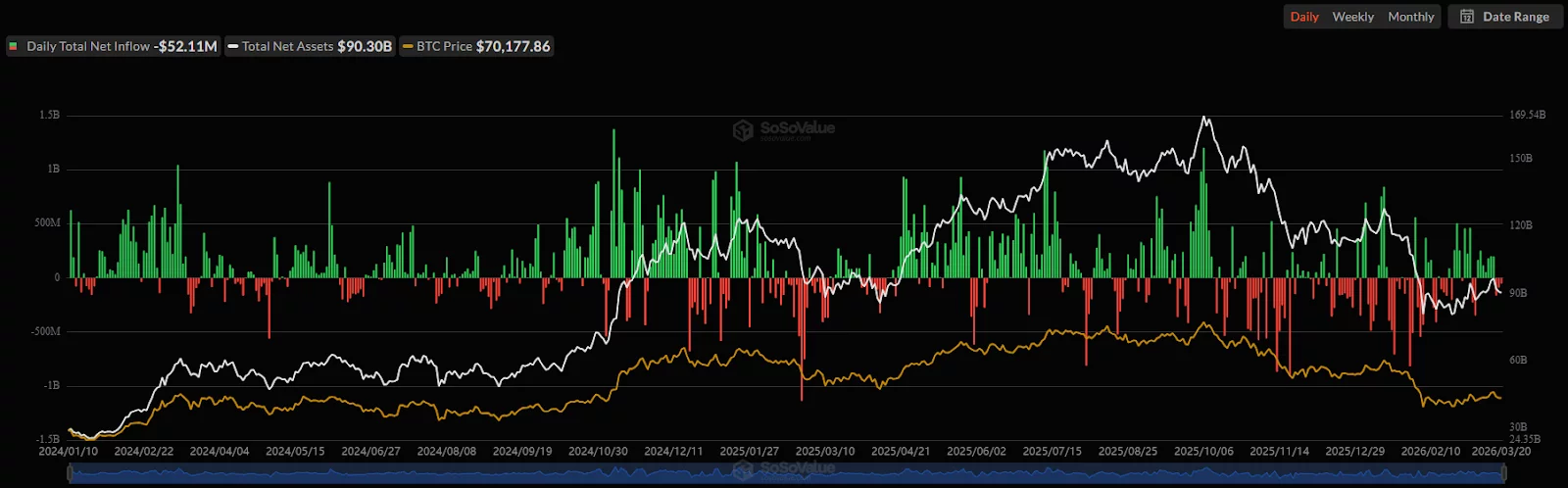
- Bitcoin ETFs saw a reversal, with $300M pulled out, contributing to the recent price decline.
- Geopolitical tensions and Fed’s comments on inflation pressure Bitcoin’s price, adding volatility.
The price volatility is compounded by broader market trends, as Bitcoin now struggles to maintain its position above the $68,000 support level. The current trading range is marked by price fluctuations, with Bitcoin caught between support at $68,000 and resistance at $76,000.
Macro factors and federal reserve’s influence
This outlook has contributed to a more cautious approach from investors, as market volatility tends to increase under such conditions. As predictions suggest that rate cuts could be delayed, Bitcoin’s price faces downward pressure, mirroring the broader downturn in risk assets.
In addition, geopolitical developments, particularly the escalating tensions in the Middle East, also played a role in Bitcoin’s price decline. A dramatic dip was observed after U.S. President Trump made threats regarding Iran, which caused a brief but sharp drop in Bitcoin’s price. These events highlight the sensitive nature of Bitcoin as a risk-on asset, reacting swiftly to global political unrest.
Bitcoin’s volatility is often exacerbated by such geopolitical tensions, as investors move funds into or out of assets like Bitcoin based on the prevailing market sentiment.
ETF reversal and capital outflows
However, in the days that followed, investors began pulling funds out, with more than $300 million in withdrawals over the course of three days. This sudden shift in ETF flows coincided with Bitcoin’s price correction, indicating that institutional sentiment may be cooling, adding to the overall market pressure.
Disclosure: This article does not represent investment advice. The content and materials featured on this page are for educational purposes only.