
HÀ NỘI — The Ministry of Industry and Trade is planning to inspect five diamond and jewellery businesses next month as it steps up oversight of a market shaken by smuggling investigations and weakening consumer confidence.
Conducted under the national anti-money laundering programme, the inspections will focus on invoices, certificates of origin, product labelling and compliance with trading regulations.
They come following weeks of turmoil in the domestic diamond market, which began after authorities uncovered an alleged cross-border diamond smuggling ring involving more than 28,000 diamonds worth an estimated VNĐ280 billion (US$10.6 million).
The case has shaken consumer confidence and exposed deeper weaknesses in a market that lacks transparency and liquidity.
“The inspections are intended to identify shortcomings and improve compliance rather than target enterprises showing signs of violations,” said Trần Việt Hùng, head of the Market Surveillance Operations Division under the Ministry of Industry and Trade’s Market Surveillance Agency.
According to Hùng, the investigations are merely routine and are not targeting companies suspected of wrongdoing. Businesses selected for inspection will receive advance notice.
He acknowledged that regulating diamonds presented unique challenges.
Unlike gold, gemstones would require specialised equipment and technical expertise to verify quality. Market surveillance officers would not be able to determine characteristics like carat weight or grading through visual inspection alone. Meanwhile, handling seized gemstones would also require specialised procedures.
In addition, diamonds are not classified as a conditional business sector in the same way as gold, meaning authorities do not maintain comprehensive statistics on the number of traders nationwide, according to Hùng.
Industry participants say the latest inspections could help strengthen compliance. However, restoring confidence will require broader reforms that improve transparency across the supply chain, from certification and traceability to consumer protection.
Not like gold
For years, many buyers have regarded diamonds as an investment similar to gold, encouraged partly by retailers’ buyback commitments. Financial experts say the comparison is misleading.
According to Trần Trọng Đức, founder and CEO of wealth management firm Virtus Prosperity, diamonds and gold belong to two entirely different asset classes, despite often being grouped together as stores of wealth.
Gold has become a globally recognised reserve asset because it is standardised, highly liquid and universally accepted by financial institutions. A gold bar meeting international standards is interchangeable regardless of where it is produced, allowing it to be traded efficiently through exchanges and investment funds.
Diamonds, however, are inherently unique. Every stone differs in its combination of carat, colour, clarity and cut, making objective pricing far more difficult and preventing the development of a deep secondary market.
“This lack of standardisation makes it virtually impossible to establish standardised futures contracts or physically backed diamond ETFs,” Đức said.
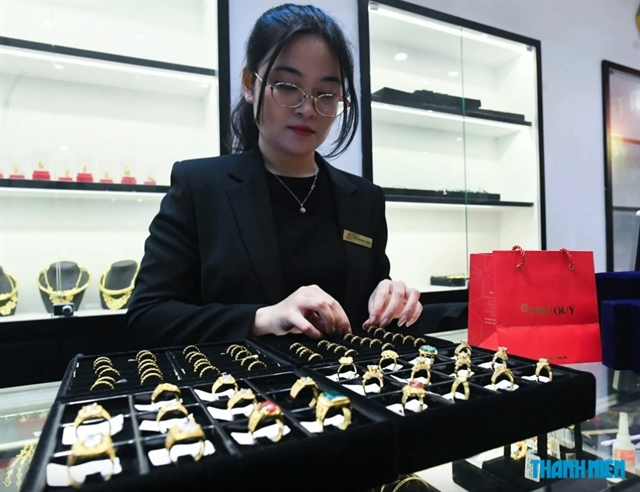 |
| Gold and gemstone jewellery is displayed at a store in Hà Nội. Authorities are stepping up inspections of diamond and jewellery businesses following recent market turmoil. — Photo thanhnien.vn |
The distinction becomes even clearer during periods of market stress.
Central banks around the world hold gold as part of their foreign exchange reserves because it can be sold quickly to support monetary stability. Diamonds have never played such a role, because each stone must be individually assessed before a transaction can take place.
Instead of treating diamonds as an investment product, Đức believes consumers should view them primarily as luxury goods whose value lies in craftsmanship, personal significance and long-term family ownership rather than financial returns.
He likened diamonds to fine art, luxury watches or collectible handbags – products that deliver emotional and lifestyle value rather than predictable investment performance.
Protecting consumers
The Vietnam Consumer Protection Association warned that customers could face problems if a retailer closes before delivering an order or while jewellery is still being repaired or customised. It said consumers should also check the terms of any buyback or exchange commitments against their contracts, invoices, warranty certificates and other documents provided by the retailer.
The association advised consumers to keep all purchase documents, including invoices, warranty cards and grading certificates, and to seek support from consumer protection authorities or market surveillance agencies if retailers fail to honour their contractual obligations.
It also urged buyers to exercise greater caution when purchasing high-value items such as diamonds and gemstones, particularly by checking a company’s reputation and product documentation before making a purchase.
“Amid conflicting information in the market, diamond owners should not rush to sell or make hasty decisions out of concern. Every transaction is different, and customers’ rights should be assessed based on the relevant documents and the specific commitments between the parties,” the association said in a statement published on its website on July 24.
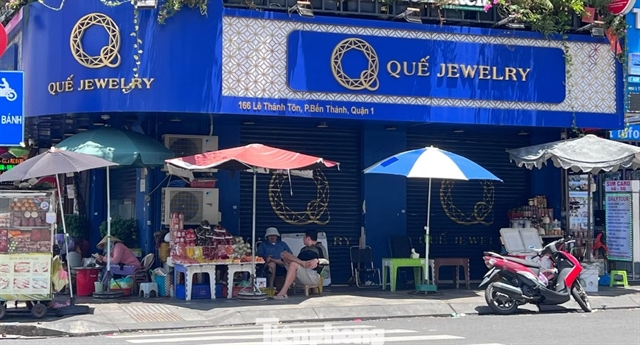 |
| A jewellery store in HCM City remains closed amid recent turmoil in Việt Nam’s diamond market. — Photo tienphong.vn |
While industry participants generally support tighter oversight, many believe regulation should move beyond periodic inspections.
Analysts say the recent disruption has exposed longstanding weaknesses in certification, information disclosure and the secondary market, rather than isolated compliance failures.
According to Nguyễn Thị Thu Hương, head of the wealth management division at investment consulting firm FIDT, Việt Nam still lacks unified industry standards and an independent certification mechanism.
The absence of an independent certification system separating grading laboratories from retailers gives sellers a significant information advantage, leaving buyers to bear most of the risks, even when purchasing from established brands.
Economist Lê Bá Chí Nhân said Việt Nam should consider developing a dedicated regulatory framework for diamonds similar to that applied to the gold market.
Rather than relying primarily on inspections after problems arise, he proposed building a digital ecosystem linking customs, tax authorities, market surveillance agencies and certification organisations.
Each diamond could eventually carry a unique digital identifier containing information on import origin, grading, manufacturing and ownership history, improving traceability while reducing opportunities for fraud.
In the first half of the year, Việt Nam imported diamonds worth about $121.5 million, with India accounting for more than half of the total, followed by Belgium and Israel, according to data from Việt Nam’s Department of Customs under the Ministry of Finance.
According to analysts, the ministry’s inspections may strengthen compliance, but rebuilding confidence in Việt Nam’s diamond market will require a more transparent and trustworthy marketplace. — VNS