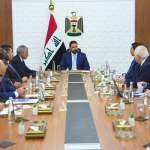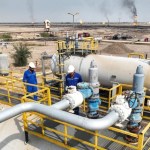
The General Company for Ports of Iraq (GCPI) has confirmed that Iraq has formally deposited its maritime zones map and associated coordinates with the United Nations (UN), in a move aimed at consolidating its maritime rights and strengthening its legal position in boundary matters.
Director General Dr Farhan Al-Fartousi said the deposit was made on 18th February by Iraq’s Permanent Mission to the UN, following extended technical work involving specialised Iraqi committees and multiple government entities. The map reportedly covers Iraq’s internal waters, territorial sea, contiguous zone and exclusive economic zone, and is intended to provide a consolidated legal and technical reference supported by precise coordinates.
Iraq’s Ministry of Foreign Affairs stated that Government Decision No. 266 of 2025 underpinning the submission was based on Iraqi laws and resolutions governing maritime jurisdiction, and was aligned with the 1982 UN Convention on the Law of the Sea and established principles of international law.
The Ministry described the delimitation of Iraq’s maritime zones as a sovereign matter, asserting that no State has the right to intervene, while reaffirming Iraq’s commitment to relevant international legal provisions.
However, the Ministry of Foreign Affairs of Kuwait has issued a statement objecting to what it described as Iraqi claims affecting Kuwait’s sovereignty over certain maritime areas and stable maritime features, including Fasht Al-Qaid and Fasht Al-Aij.
Kuwait said these areas had not previously been subject to dispute regarding its full sovereignty. It summoned Iraq’s chargé d’affaires in Kuwait to deliver a formal note of protest, and called on Iraq to adhere to international law, including the 1982 UN Convention on the Law of the Sea, as well as existing bilateral agreements and memoranda of understanding between the two countries.
The Iraqi submission is expected to have implications for ongoing discussions related to maritime boundary arrangements, including matters linked to the Khor Abdullah waterway.
According to Qatar-based Al Jazeera, Kuwait’s position is supported by Qatar, Saudi Arabia, the United Arab Emirates (UAE) and Oman.