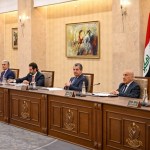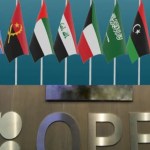
Iraq is considering withdrawing from OPEC if the organization rejects the country’s push to raise its oil production quota in line with those of some other member states, government sources told Shafaq News on Wednesday.
The sources said the proposal forms part of a broader plan to increase oil exports and compensate for losses incurred during the recent war. Baghdad is also assessing the potential impact of exceeding OPEC’s production ceiling, including the effect that a higher global crude supply could have on oil prices.
“Any decision to increase production or withdraw from OPEC would likely come after Prime Minister Ali al-Zaidi’s planned visit to Washington in the middle of next month,” they added.
Why Iraq Is Considering an OPEC Exit
Iraq is OPEC’s second-largest crude producer and one of the most oil-dependent economies in the world, with crude sales funding roughly 90 percent of state revenue. That reliance leaves Baghdad acutely exposed to any disruption in its export routes, above all the Strait of Hormuz.
The country ships the overwhelming majority of its oil by sea rather than by pipeline, with roughly 93 to 95 percent passing through Hormuz, a corridor that has remained almost entirely closed since the US-Israel-Iran conflict began in February 2026.
Iraq’s output is governed by OPEC, which sets production ceilings for its members to manage global supply and prices. Baghdad has frequently pumped above its assigned ceiling and has been required to submit “compensation” plans to offset the excess, a pattern it shares with Kazakhstan. It has also argued consistently that its current quota fails to reflect the expansion of its production capacity in recent years, the core grievance now driving talk of breaking the ceiling outright.
These converging pressures shape the proposal described by the sources: the need to recover revenue lost during the export shutdown, and a market now carrying ample supply, which depresses the price Iraq earns per barrel. Exiting OPEC would remove the ceiling altogether, giving Baghdad the freedom to pump and sell at will, though such a step would be rare.
Angola left the group in early 2024 over a similar quota dispute, Qatar withdrew in 2019, Ecuador in 2020, Indonesia in 2016, and the UAE in 2026.