
Bitcoin is trading around $92,000 ahead of the Bureau of Labor Statistics’ 8:30am ET release of September 2025 Real Earnings data, the first inflation-adjusted wage report since the government shutdown.
The report measures whether workers’ purchasing power is growing by comparing nominal wage gains against CPI inflation—a critical input for Fed policy that could swing crypto markets.
August showed real hourly earnings fell 0.1% as 0.3% wage increases trailed 0.4% inflation, keeping year-over-year real gains at just 0.7%.
Today’s September data will reveal if workers maintained purchasing power, directly impacting Fed rate cut odds that have plunged to 33% from nearly 100% three weeks ago.
Strong real wage growth could justify the Fed’s hawkish stance and pressure risk assets like Bitcoin, while stagnant earnings might revive dovish expectations and support crypto.
Crypto markets remain hypersensitive to macro data after Bitcoin crashed from $126,000 to current levels, wiping out $1 trillion in total market cap.
Yesterday’s jobs report showed nominal September wage growth of 0.2% monthly and 3.8% annually, but the real earnings calculation, which adjusts for actual consumer price increases, determines if Americans experienced genuine income gains or purchasing power erosion.
This matters for crypto because the Fed’s next move depends heavily on whether wage-driven inflation pressures persist.
Higher real earnings could fuel continued consumer spending and inflation, keeping rates elevated longer and hammering speculative assets.
Lower real earnings signal economic weakness that typically prompts rate cuts and liquidity injections—historically bullish catalysts for Bitcoin.
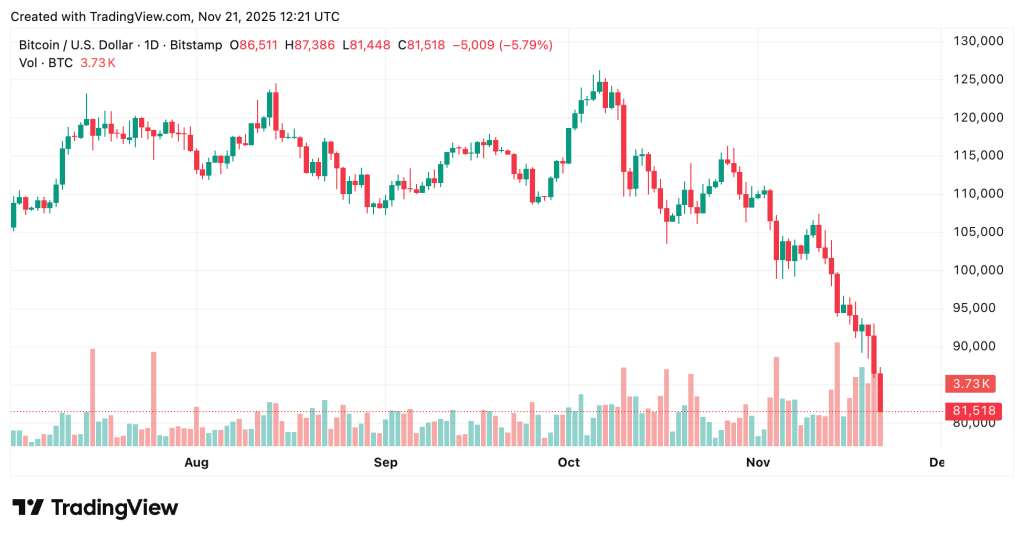
Technical indicators show Bitcoin sitting just below key resistance with bullish divergences on RSI and MACD, suggesting oversold conditions that could reverse on dovish data.
The crypto market cap trades at $3.2 trillion inside a parallel channel with resistance at $3.25 trillion, while extreme fear grips sentiment indicators.
If real earnings disappoint and support the case for Fed easing, Bitcoin could attempt a breakout toward $90,000-$100,000.
Conversely, strong purchasing power gains would reinforce restrictive policy expectations and risk accelerating crypto’s selloff toward $80,000 support.
With Treasury yields above 4.1% and the dollar at six-month highs, today’s 8:30am release represents a critical inflection point for risk assets, which are desperately seeking relief from tightening financial conditions.
Market Update: Bitcoin Braces for Real Earnings Data
1 of 1
Raoul Pal: “Utterly Brutal” Crypto Selloff Mirrors 2021 Crash Amid Flat Real Wage Data
Macro investor Raoul Pal described current crypto markets as “utterly brutal with relentless, rapid positions unwinding” as today’s Real Earnings report showed wages barely keeping pace with inflation.
The BLS reported real average hourly earnings were unchanged in September, with a 0.2% pay increase matched by 0.3% inflation — indicating the economic stagnation backdrop as crypto markets unwind.
Pal drew parallels to 2021, noting: “In a 4 week period Bitcoin fell 56%, ETH -62% and SOL fell -68%. It then sharply reversed and exploded to new highs.“
Despite the flat wage data that could support Fed pause rhetoric, Pal emphasized: “With the macro backdrop still so positive it is hard to think that we won’t see something similar here (a sharp recovery)“ while acknowledging “massive downside volatility like this is not easy for anyone.“
The Real Earnings data showing 0.8% year-over-year gains suggests neither runaway inflation nor collapse, yet crypto continues selling off amid what Pal describes as impaired market maker balance sheets and liquidity concerns rather than fundamental macro weakness.
Utterly brutal crypto markets with relentless, rapid positions unwinding and rumours swirling after 10/10 of impaired market maker balance sheets leading to less liquidity and someone blowing up.
It reminds me a lot of 2021 when in a 4 week period Bitcoin fell 56%, ETH -62% and… pic.twitter.com/Voalrtd5Tt
— Raoul Pal (@RaoulGMI) November 21, 2025
US Real Wages Flat in September as 0.2% Pay Gain Matched by Inflation
The US Bureau of Labor Statistics reported that real average hourly earnings for all employees were unchanged from August to September, as a 0.2% increase in average hourly earnings was matched by a 0.3% rise in the Consumer Price Index.
Real average weekly earnings decreased 0.1% over the month. Year-over-year, real average hourly earnings increased 0.8%, with real weekly earnings up 0.7% over the same period.
The flat month-over-month reading suggests workers’ purchasing power remains stagnant despite nominal wage gains, as inflation continues to erode pay increases.
For Bitcoin and crypto markets, the data presents mixed signals: persistent inflation could support the hawkish Fed stance that RSM’s Joseph Brusuelas highlighted regarding a December rate cut pause, potentially pressuring risk assets, while the modest 0.8% year-over-year real wage growth signals an economy that’s neither overheating nor collapsing — leaving crypto in limbo as traders await clearer Fed policy direction.
US Real Earnings Report Drops Today at 8:30am ET as August Showed First Decline Since Spring
The US Bureau of Labor Statistics releases September’s Real Earnings report at 8:30am ET today, following August data that showed real average hourly earnings decreased 0.1% month-over-month as inflation outpaced nominal wage gains.
August marked workers losing purchasing power despite a 0.3% increase in average hourly earnings, with the Consumer Price Index rising 0.4% and offsetting wage growth.
Today’s report could impact Bitcoin and crypto markets depending on whether real earnings continue declining—suggesting persistent inflation pressure that may delay Federal Reserve rate cuts and weigh on risk assets—or rebound, potentially supporting the case for looser monetary policy that typically benefits cryptocurrency prices.
Year-over-year, August real earnings were up just 0.7%, reflecting the ongoing squeeze on worker purchasing power that influences broader economic sentiment and Fed policy expectations.