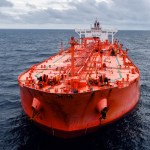
Tanker traffic through the Strait of Hormuz dipped on Sunday to the lowest number in five weeks as the latest U.S.-Iran escalation reignited concerns among ship operators about safety at the key oil and LNG chokepoint.
On Sunday, after the U.S. carried out a third wave of strikes on Iran, and Iran retaliated by targeting U.S. bases in Kuwait, Bahrain, Qatar, Oman, and Jordan, only six tankers were tracked by Kpler to have transited the Strait of Hormuz, Reuters reported on Monday.
Sunday’s traffic numbers were the lowest in five weeks, while reports from early Monday point to no ship attempting to brave the Strait, at least none visible on AIS systems.
The transits on Sunday included a supertanker carrying Iranian oil, a tanker shipping oil products from Kuwait, and three empty tankers inbound to the Persian Gulf en route to load oil from export ports.
No LNG tanker visible on the tracking systems transited the Strait of Hormuz this weekend, according to Kpler’s data cited by Reuters.
Oil and LNG tankers are back to switching off transponders when transiting the Strait of Hormuz as the latest escalation in the region and last week’s Iranian attacks on commercial ships prompted vessel operators to brave the chokepoint unobserved.
The re-emergence of the dark-mode transit is in stark contrast with the previously seen rising flow of oil tankers and LNG carriers with AIS positioning systems turned on, in the weeks between the signing of the U.S.-Iran memorandum of understanding and early last week.
“Multi-source analysis of the eastern approaches to the Strait of Hormuz shows 8 dark vessels active in the area on July 12, none transmitting AIS,” maritime intelligence firm Windward said on Sunday.
“Among them, two vessels appear engaged in a ship-to-ship transfer off the UAE/Oman coast. Four additional dark vessels were tracked moving inbound, and one vessel appeared stationary in the area for the first time.”
By Charles Kennedy for Oilprice.com