HÀ NỘI — Deputy Prime Minister Phạm Gia Túc has called on ministries and agencies to promptly address recommendations from businesses in the electronics and semiconductor sectors, stressing the need to strengthen domestic supply chains and improve Việt Nam’s trade balance.
Deputy PM Túc made the request at a meeting on Tuesday with the Vietnam Electronic Industries Association and representatives of major electronics and semiconductor import-export companies.
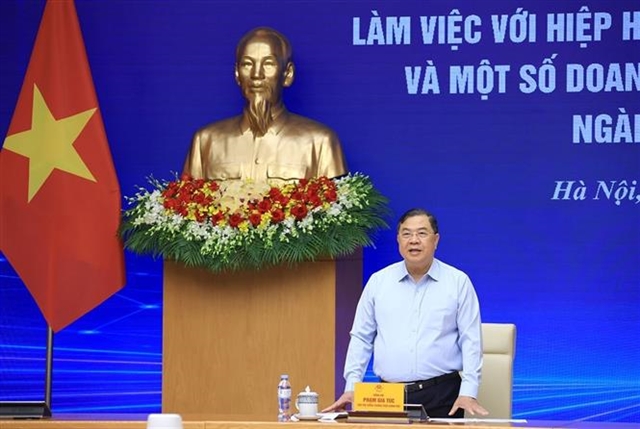 |
| Deputy Prime Minister Phạm Gia Túc speaks at a meeting with businesses in the electronics and semiconductor sectors on Tuesday. — VNA/VNS Photos |
The electronics sector maintained strong growth in the first eight months of 2026. Exports of computers, electronic products, phones and components reached an estimated US$101 billion, up 51 per cent year-on-year.
Phone production was estimated at 90 million units, while exports of phone components rose to nearly $12 billion. The figures show that Việt Nam is gradually expanding from final assembly into component manufacturing.
However, imports in the sector also increased sharply. Imports of computers, electronic products and components reached $161 billion, up 68 per cent, resulting in a trade deficit of about $60 billion.
Most imports were production inputs, such as integrated circuits, memory chips, processors, displays and circuit boards. These products are used for assembly, packaging and high-tech production, including AI infrastructure, data centres and chip testing.
The US was Việt Nam’s largest export market in the first seven months, with exports worth $104 billion, while China was the largest source of imports, at $138 billion.
Strengthening domestic suppliers
The meeting highlighted the underdevelopment of supporting industries as a major challenge for the electronics sector.
Although Việt Nam is benefiting from the global shift in foreign direct investment and rising demand for AI infrastructure, domestic companies remain heavily dependent on imported components and materials.
Industry representatives called for stronger investment incentives and updated regulations on supporting industries, as well as the implementation of the 2026-35 Supporting Industry Development Programme to increase local content and reduce import dependence.
Chairman of the Vietnam Electronic Industries Association Nguyễn Văn Đông proposed a programme to develop domestic electronics suppliers for items like printed circuit boards, PCB assemblies, precision engineering, cables and connectors, sensor modules and electronic components.
It also called for stronger links between foreign-invested companies and Vietnamese suppliers. Foreign-invested groups should provide information on procurement needs, technical standards and supplier selection processes to help domestic firms join global supply chains, the association said.
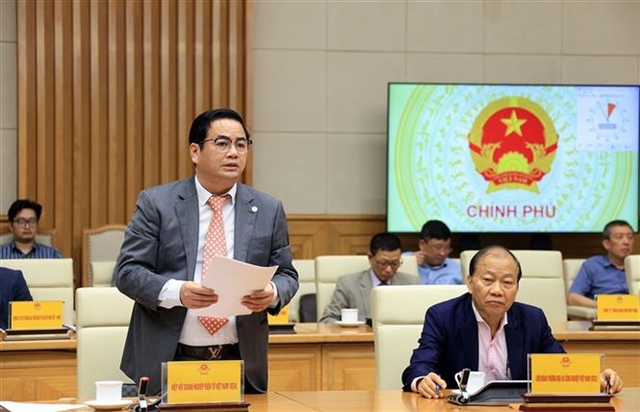 |
| Nguyễn Văn Đông, chairman of the Vietnam Electronic Industries Association, makes a proposal at the meeting. |
Businesses also proposed tax, credit and land incentives for innovative companies, along with support for digital transformation, smart factories and core technology development. They called for simpler and more digitalised procedures for imports, exports and customs clearance.
A representative of Intel Products Vietnam said investment incentives are currently spread across different laws, making them difficult to access. The company proposed consolidated guidance on incentives and a database of Vietnamese suppliers capable of providing products and services to the electronics and semiconductor industries.
Hanyang Digitech Vina representative also called for more streamlined procedures for importing used production equipment transferred between legal entities within the same group, provided the equipment meets requirements on quality, safety, energy efficiency and environmental protection.
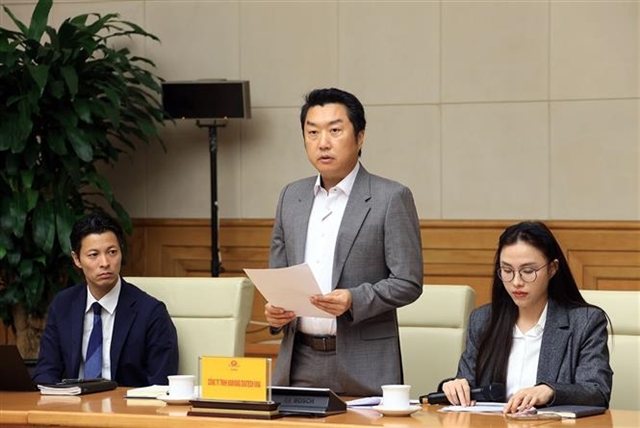 |
| A representative of Hanyang Digitech Vina Co Ltd speaks at the meeting. |
Deputy PM Túc said the Government wants electronics and semiconductor companies to continue expanding production in Việt Nam and pledged further improvements to regulations and administrative procedures.
“Business success is Government success, while businesses’ difficulties are the responsibility of the Government, ministries, agencies and local authorities to address,” he said.
He instructed relevant agencies to handle business recommendations quickly and carefully.
The Ministry of Industry and Trade was asked to work directly with companies with large differences between import and export values to clarify the purpose and structure of imports, particularly inputs used for export production.
To reduce the trade deficit, the deputy PM called for an updated list of supporting industry products, with priority given to components and materials with strong domestic demand and potential for localisation.
He also called for stronger early warning mechanisms on global trade developments, better use of new-generation free trade agreements and greater diversification of export markets and sources of production inputs.
The Government will also develop programmes connecting Vietnamese suppliers with domestic and international electronics, semiconductor and technology groups, based on product chains, technical standards and business demand. — BIZHUB/VNS