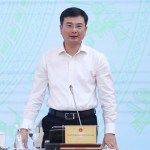
HÀ NỘI — Ensuring national energy security is vital to maintaining macroeconomic stability and enhancing Việt Nam’s competitiveness in its next phase of development, Nguyễn Văn Phương, deputy head of the Central Commission for Policy and Strategy, said at an international workshop in Hà Nội on Thursday.
The workshop, themed “Developing LNG Infrastructure in Vietnam: International Experience and Policy Implications”, was organised by the Institute for Policy and Strategy Studies under the Central Commission for Policy and Strategy, in collaboration with the US Embassy in Việt Nam and US company Excelerate Energy.
The event came as Việt Nam steps up implementation of Politburo Resolution No. 70-NQ/TW on national energy security, while seeking to address the challenges of energy transition and infrastructure development amid growing volatility in global energy markets.
The country has made initial progress in developing its LNG-to-power sector, with the Thị Vải LNG terminal and the Nhơn Trạch 3 and Nhơn Trạch 4 thermal power plants having commenced commercial operations.
However, Phương outlined four major challenges that need to be addressed to develop a sustainable LNG infrastructure system.
These include coordinating development across the entire value chain, from imports, storage and regasification to power generation and transmission. A stable, financially viable market is also needed, without inflexible take-or-pay arrangements that shift risks to electricity buyers and end consumers.
Investment decisions must balance security of supply and economic efficiency with energy transition goals, while managing excess capacity and methane emissions. Appropriate investment models should also ensure effective allocation of five key risks: fuel prices, supply volumes, exchange rates, project schedules and financing.
US Ambassador to Việt Nam Jennifer Wicks highlighted the country’s progress in adjusting its Eighth National Power Development Plan (Power Plan VIII), describing LNG-fired power generation as a strategic investment in maintaining the stability of the national energy system.
She said modern LNG import terminals would strengthen Việt Nam’s ability to secure long-term supply contracts and reduce its exposure to external market shocks.
To attract international investment and encourage greater participation by US companies, Wicks stressed the need for easier access to financing, transparent energy pricing mechanisms, clear regulations on power capacity and licensing frameworks aligned with international standards.
She reaffirmed the US commitment to supporting Việt Nam through policy consultation, experience-sharing and technology transfer.
From the government’s perspective, Deputy Minister of Industry and Trade Nguyễn Việt Sơn identified five priority areas for action: aligning infrastructure development with actual demand forecasts; promoting energy hubs and shared infrastructure to optimise investment costs; improving coordination between the gas and electricity markets; diversifying supply sources through a combination of long-term and spot contracts; and strengthening international cooperation in investment, technology and finance.
He also announced that the National Assembly had passed amendments to the Electricity Law, while the Ministry of Industry and Trade is working to finalise and update the revised Power Plan VIII, with completion expected in 2026.
These regulatory and planning developments are expected to create a more favourable environment for investment, remove existing obstacles across the LNG project value chain and support the development of an integrated infrastructure system for Việt Nam’s long-term energy security. — VNS