
Key Takeaways
- Bitcoin fell 1.45% to roughly $77,500.
- Monero and TRON led daily losses.
- Rising yields make speculative assets less attractive.
- A rapid yen reversal threatens carry trades.
September opens with a controlled pullback
Among the leading cryptocurrencies tracked at the time, Monero posted the steepest daily loss, falling 3.6% to $502. TRON dropped 2.8% to $0.32, Solana lost 1.6% to $101 and Ethereum declined 1.5% to $2,430. Monero nevertheless remained almost 13% higher over seven days, while Solana retained a weekly gain of 2.6%. Their daily losses therefore followed recent strength rather than extending a weeklong sell-off.
The losses were broad enough to show weaker risk appetite, but not severe enough to establish that investors were rushing out of crypto. The crypto pullback coincided with a sharper repricing in oil and government bonds, where the potential consequences extended beyond a single trading session.
Oil and Fed expectations push yields higher
That combination creates a direct valuation problem for crypto. Higher Treasury yields improve the return available from lower-risk assets while raising the cost of financing leveraged positions. Bitcoin does not need to experience a wave of bond-driven selling for those conditions to matter; investors are being offered more compensation for holding cash and government debt at the same time that speculative exposure is becoming more expensive.
Rates also explain why Japan cannot be treated as a separate currency footnote. The yen finances carry trades across global markets, while rising Japanese yields can make those positions more expensive to maintain. The speed and method of any policy response therefore matter more than the exchange rate alone.
READ MORE:

Binance Adds 1,000 Stock Options With a Key Expiry Rule
The yen threat is a reversal, not weakness itself
The yen’s slide toward 160 per dollar is not automatically bearish for Bitcoin. Japan’s historically low borrowing costs have allowed investors to borrow in yen and place that capital into assets offering higher potential returns. A weak currency can keep that strategy attractive as long as financing remains inexpensive and the exchange rate moves gradually.
The risk begins when the yen strengthens quickly or Japanese borrowing costs rise far enough to undermine those positions. Investors may then need to sell assets elsewhere, repurchase yen and repay their funding, allowing pressure that begins in Japan to reach equities, bonds and crypto.
Nothing in the September 1 crypto move proves that such an unwind has started. Evidence would require more than a weak trading session: the yen would need to appreciate rapidly as losses spread across leveraged markets and Bitcoin weakened alongside other risk assets. Until those conditions appear together, the currency remains a credible vulnerability rather than the established cause of the current decline.
Bitcoin still has room above $76,000
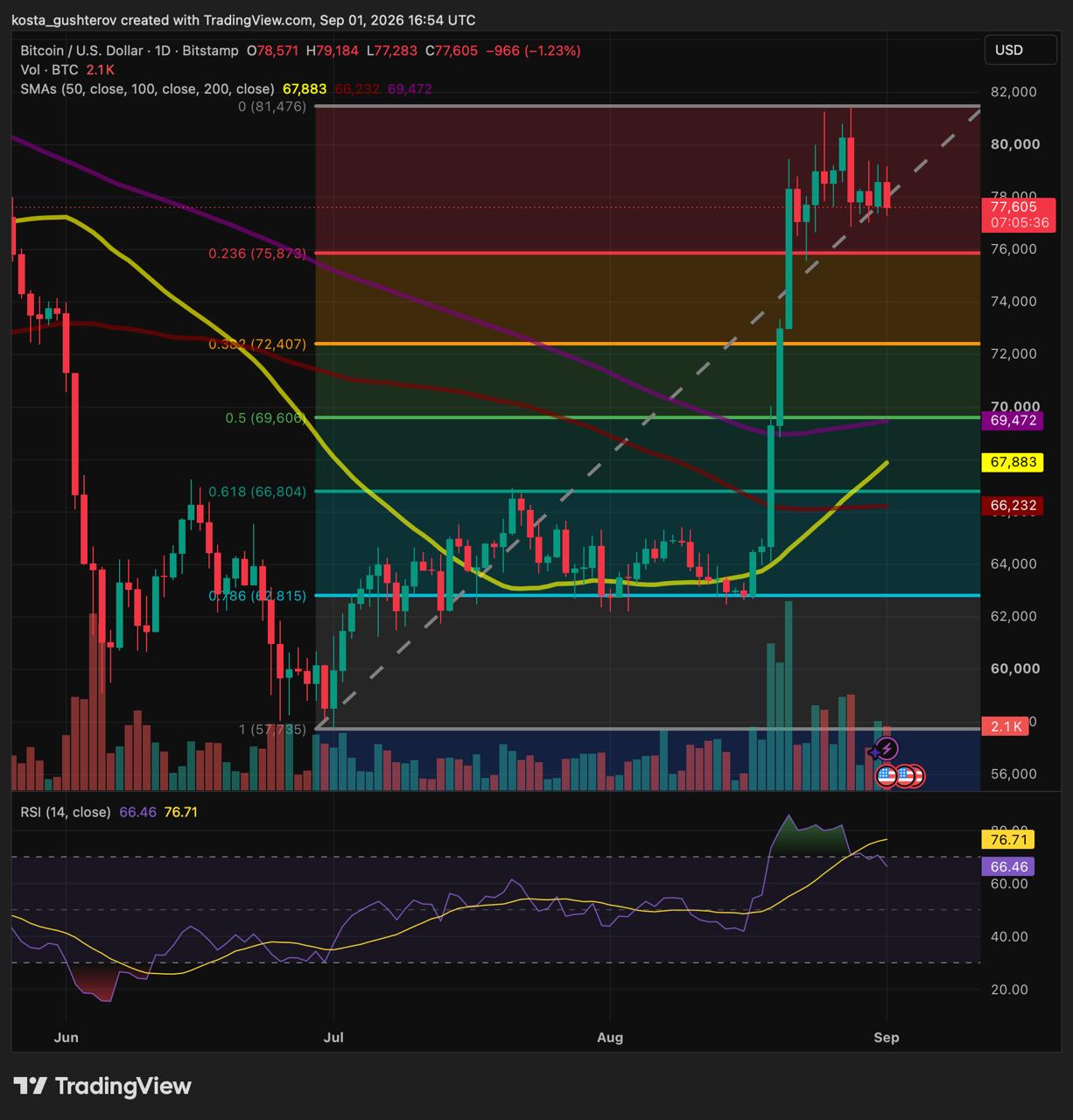
A daily close below $76,000 would show that the pullback is reaching beyond the opening reaction to higher yields. Reclaiming $80,000 would instead indicate that buyers absorbed the macro pressure. Until either boundary breaks on a daily closing basis, Bitcoin remains under pressure without confirming a larger trend change.
September’s opening move is still a rates story
As of time of writing the market is probably reacting to higher yields and a less favorable Federal Reserve outlook, while the yen remains a conditional risk. A sudden currency reversal accompanied by a Bitcoin close below $76,000 might be the first sign that those two pressures were beginning to reinforce each other.